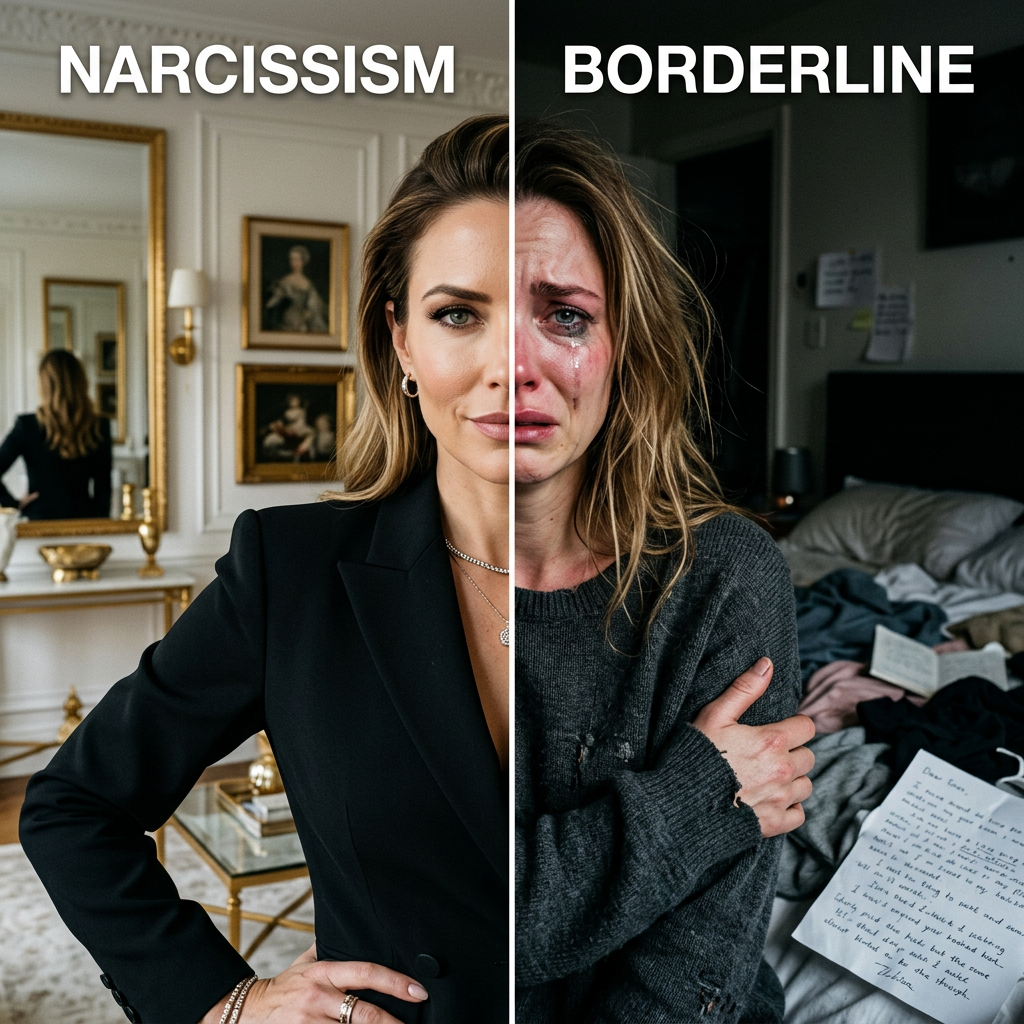
If you have been in a painful relationship, or if you have received a diagnosis that didn’t quite fit, you may have wondered about the difference between narcissism and borderline personality disorder. The two are frequently confused, often co-occur, and can look strikingly similar from the outside.
Understanding narcissism vs. borderline personality disorder matters, both for people who have been diagnosed and for those trying to make sense of someone in their life.
What They Have in Common
Both narcissistic personality disorder (NPD) and borderline personality disorder (BPD) involve difficulties with emotional regulation, unstable relationships, and a fragile sense of self. Both are rooted in early relational experiences. And both can cause real harm in relationships, including to the person living with them.
That overlap is exactly why they get conflated so often, including by clinicians.
The Core Difference: Where the Pain Goes
Here is the clearest way to understand the distinction:
In NPD, the pain tends to go outward. The person protects themselves from feelings of inadequacy by externalizing blame, maintaining superiority, and requiring admiration from others. Empathy is limited, not as a choice, but because genuine attunement to others threatens the self-image they depend on.
In BPD, the pain tends to go inward. The person experiences intense fear of abandonment, a rapidly shifting sense of identity, and emotional swings that can feel impossible to manage. Empathy is often high, sometimes overwhelmingly so, but emotional dysregulation makes relationships intensely difficult.
According to NAMI, BPD affects approximately 1.4% of adults in the U.S., though many researchers believe it is significantly underdiagnosed.
4 Key Differences Between NPD and BPD
1. Relationship to empathy.
People with BPD often feel too much empathy and struggle to regulate the emotions that come with it. People with NPD often struggle to access empathy for others at all.
2. Fear of abandonment.
While both can be sensitive to rejection, in BPD the fear of abandonment is central and driving. It shapes nearly every close relationship. In NPD, rejection is more likely to provoke rage or contempt than fear.
3. Sense of self.
People with BPD often describe feeling like they don’t know who they are. Their identity shifts depending on who they are with. People with NPD tend to have a rigidly defended self-image, even when it is inflated or fragile.
4. Insight and distress.
People with BPD are often highly aware of their patterns and distressed by them. People with NPD are less likely to seek help because the disorder itself limits their ability to recognize the impact of their behavior on others.
Why Misdiagnosis Happens
BPD in particular is dramatically underdiagnosed, misdiagnosed, and stigmatized. Research published in Psychiatric Services has found that women with BPD are frequently misdiagnosed with depression or bipolar disorder, while men with BPD are more likely to be misdiagnosed with PTSD or antisocial personality disorder.
Getting the right diagnosis is not about labeling yourself or someone else. It is about understanding what is actually driving the pain, so the right kind of help can be found.
Healing Is Possible for Both
Neither diagnosis is a life sentence. Both NPD and BPD are treatable. DBT (Dialectical Behavior Therapy) has the strongest evidence base for BPD. Trauma-focused approaches, including EMDR, can address the underlying relational wounds in both.
If you suspect you or someone you love may be dealing with either, working with a therapist who specializes in personality and trauma can make an enormous difference.
Learn more about therapy at Well Be
Book a consultation to talk through what you are experiencing
Leave a Reply